
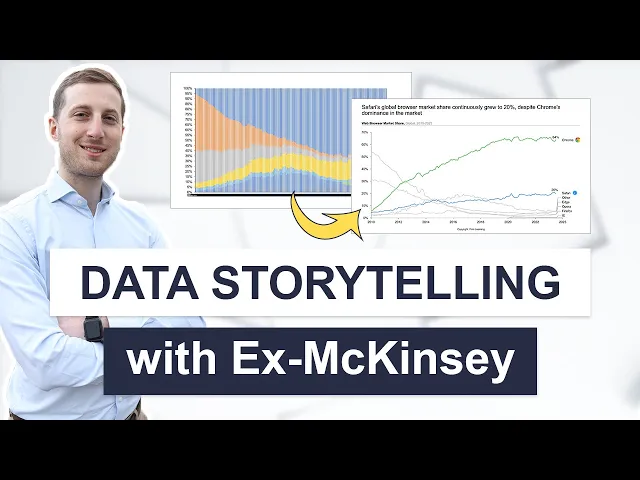

Data Storytelling vs. Data Dumping
How you present data matters. Data storytelling engages and inspires action, while data dumping overwhelms and confuses. Here’s the difference:
Data Storytelling: Turns data into a clear narrative with context, visuals, and actionable insights. It’s memorable and drives decisions. Example: Presenting sales growth as a story of overcoming challenges to achieve success.
Data Dumping: Overloads the audience with raw numbers, charts, and tables without context. It leaves interpretation up to the audience, often causing confusion and disengagement.
Key Takeaways:
Storytelling boosts retention: Stories are up to 22x more memorable than raw data.
Dumping risks disengagement: Audiences forget 90% of data-heavy presentations within a week.
Actionable insights win: Focused narratives with clear visuals lead to better decisions.
Quick Tip: Simplify your message, focus on key data points, and structure your presentation as a journey with a beginning, middle, and end.
Data Storytelling – How to Turn Data into Decisions
Data Dumping: Problems and Risks
Grasping what data dumping entails - and why it falls short - can help you sidestep common presentation mistakes that can derail even the most crucial business meetings.
What Data Dumping Looks Like
Data dumping happens when large amounts of raw data, statistics, or charts are presented without proper organization, context, or a clear narrative. You’ve probably seen it before: slides overloaded with numbers, multiple charts competing for attention, or dense tables that lack logical flow.
Picture this: a quarterly business review packed with dozens of slides, each crammed with metrics. Stakeholders are left overwhelmed, struggling to make sense of the information.
Key traits of data dumping include little to no explanation between data points and a failure to tie the information back to business outcomes. For example, a sales report might showcase every quarterly metric from the past five years on one slide. While the data is there, the lack of focus on trends or actionable insights leaves the audience drowning in numbers.
This approach treats raw data as the end goal rather than a tool to communicate insights. The assumption that "more data equals better understanding" often backfires, leaving the audience confused rather than informed.
Such unstructured presentations pave the way for the significant issues outlined below.
Problems with Data Dumping
Once you understand what data dumping looks like, its consequences become glaringly obvious. At its core, data dumping creates an immediate disconnect between the presenter and the audience. Helen Packham explains it well:
"Stacking your brain with statistics, or dumping them onto a slide guarantees one thing – your audience will disconnect".
When faced with an overload of data, audiences tend to forget up to 90% of the details, making it nearly impossible to retain key takeaways. Imagine a stakeholder reviewing a dashboard filled with customer churn rates. They might nod along during the presentation but struggle to recall specifics just a few weeks later.
In high-pressure business settings, this disconnect can lead to serious risks. Data dumping often results in disengaged audiences, misinterpretation of information, and a failure to inspire action. If a presentation loses its impact or credibility, it becomes much harder to secure buy-in, funding, or support.
Another major issue is that data dumps fail to provide the audience with a framework to understand the bigger picture. Without context to explain why the data matters or how it relates to business challenges, decision-makers might miss critical insights. Worse, they could make decisions based on incomplete or misunderstood information. This can lead to delays, missed opportunities, and poor strategies that ultimately harm business performance and growth.
The real problem isn’t the data itself - it’s how the data is presented. When numbers are thrown at an audience without context or clarity, they’re left feeling lost, unable to extract the actionable insights they need.
Data Storytelling: Methods and Benefits
Dumping raw data on an audience often leaves them feeling overwhelmed and uninterested. On the other hand, data storytelling transforms those same numbers into meaningful narratives that inspire action and drive results. By blending narrative, data, and visuals, this approach doesn’t just inform - it guides decision-makers toward actionable solutions.
Parts of Good Data Storytelling
Great data storytelling stands on three pillars: a clear narrative, carefully chosen data, and visuals that bring everything together. Each plays a critical role in turning raw statistics into stories that resonate.
The narrative is the backbone of your story. It connects the dots between data points and creates a journey for your audience. This isn’t about simply organizing information - it's about crafting a storyline that takes your audience from identifying a problem to discovering a solution. For instance, you can structure your narrative to show how a specific challenge led to a successful resolution.
Your data acts as the proof that supports your story. Instead of overwhelming your audience with every possible metric, focus on selecting the most relevant numbers that align with your message and goals. The key is to ensure that the data you present strengthens your narrative.
Visuals are the glue that ties everything together, making your data easier to understand. Charts, graphs, and other visual tools don’t just display information - they enhance your audience’s emotional and intellectual connection to your story. When paired with a strong narrative, visuals make your data more engaging and memorable.
The best data stories follow a narrative arc - a structure with a beginning, middle, and end. This approach keeps audiences engaged by creating an emotional journey. You guide them through challenges, present solutions, and celebrate outcomes, making the experience feel like a shared adventure.
To make your data even more relatable, focus on personalizing it. Turn customer feedback or statistics into stories that highlight real-world challenges and successes. For example, you might introduce a relatable character, like a CIO trying to balance budget constraints while addressing rising demands. By doing this, you transform abstract data into human-centered narratives that stick with your audience.
Why Data Storytelling Works Better
When done well, data storytelling leaves a lasting impression that raw numbers alone simply can’t achieve. Why? Because it aligns with how people naturally process and remember information. Research from the London School of Business shows that people retain 65–70% of information shared through stories, compared to only 5–10% when presented with statistics alone. Similarly, a Stanford study found that stories are up to 22 times more memorable than standalone facts.
This difference comes down to emotional connection. Stories engage audiences on a deeper level, turning them into active participants rather than passive listeners. By weaving complex information into relatable, human-centered narratives, you create a connection that raw data can’t replicate.
Another reason storytelling works is that it helps audiences understand the why behind the data. Instead of just presenting what happened, a story explains why it matters and how it ties into broader business goals. This added context motivates people to act on the insights you share.
Data-driven stories also make it easier to rally teams around specific initiatives. When people see how the data connects to their own experiences or goals, they’re more likely to support decisions and embrace change. For example, a well-crafted story about customer pain points can inspire a team to prioritize customer-focused projects.
Storytelling also simplifies complex data. Rather than overwhelming your audience with endless statistics, a good story presents information in a clear, structured way that keeps them engaged and helps them follow along. This approach shifts your role from a data analyst to a trusted guide, leading your audience toward meaningful insights and actionable conclusions.
Perhaps most importantly, data storytelling doesn’t just engage - it drives results. While traditional presentations aim to inform, stories inspire action, build trust, and create memorable experiences. They encourage deeper engagement and help foster relationships that last. By turning data into a compelling narrative, you’re not just sharing information - you’re shaping decisions and sparking change.
Data Storytelling vs. Data Dumping: Side-by-Side Comparison
When you're gearing up for a high-stakes presentation, the decision to use data storytelling or stick with data dumping can significantly impact your results. These two methods offer vastly different experiences for your audience, and knowing how they differ allows you to choose the best approach for your objectives. Let’s delve into these strategies and see how they stack up.
Take Amazon, for example. Jeff Bezos famously replaced PowerPoint presentations with narrative memos, a move that led to better business outcomes. This shift underscores how blending storytelling with data doesn’t just inform - it drives meaningful decisions.
Research backs this up. Presentations using storytelling techniques are 35% more likely to be described as "engaging" by audiences compared to those relying solely on raw data. Additionally, 63% of business leaders find stories more memorable than statistics when making decisions.
Comparison Table
To better understand the differences, here’s a side-by-side look at key criteria for business presentations:
Criteria | Data Storytelling | Data Dumping |
|---|---|---|
Audience Engagement | High - fosters emotional and intellectual connection | Low - audiences often lose interest |
Clarity | High - narratives help simplify and clarify | Low - can overwhelm with excessive information |
Actionability | Inspires decisions and action | Rarely motivates action |
Effectiveness | Encourages retention and buy-in, especially under pressure | Struggles to persuade or drive change |
Visuals | Supports the story seamlessly | Often excessive or disconnected from the message |
Outcome | Memorable and actionable insights | Forgettable and sometimes confusing |
These differences are striking. Data storytelling can boost information retention by as much as 70% compared to presentations that rely solely on raw data. By weaving data into a narrative, you tap into the brain's natural ability to process and remember information.
This distinction is especially important in high-stakes settings where success hinges on engaging your audience, delivering clear messages, and persuading them to act. Whether you're pitching a new idea, presenting to key clients, or sharing strategic insights, how you present your data can matter more than the data itself.
How to Turn Data Into Stories
Turning raw data into engaging stories involves a thoughtful approach that starts with understanding your audience and ends with visuals that simplify and clarify your message. Here's how to make it happen.
Match Data to Business Goals
Your data story should align with what matters most to your audience. Start by identifying the key business question or decision they care about, then choose data points that directly address those priorities.
For example, if you're presenting to financial executives, focus on metrics like ROI and cost savings. On the other hand, if your audience includes marketing managers, highlight trends in customer engagement and conversion rates. Tailoring your data to the audience ensures your message resonates with the decision-makers in the room.
Think of it as solving a puzzle: begin with the challenge at hand, then show how your data provides the solution. If a company is struggling with customer retention, showcase trends and patterns that offer actionable insights. Frame the data as a journey, walking your audience from problem identification to a clear, data-driven solution.
Using the Hero's Journey framework can add a human element to your story. Position your audience as the hero facing a challenge, present your data as the guide that lights the way, and conclude with the success that informed decisions can bring.
Once you've defined the narrative, refine your data to support it effectively.
Choose the Most Important Data Points
With clear business goals in mind, it's time to streamline your data. Great storytelling requires focus - only include the metrics that directly support your narrative and drive decisions. Every data point should serve a purpose.
Instead of overwhelming your audience with a flood of information, present a few key metrics that pack the most punch. For instance, when discussing quarterly sales performance, highlight a single, standout trend rather than drowning your audience in excessive details. This approach keeps their attention and ensures your message sticks.
A helpful trick is to apply the "so what?" test to your data. If a statistic doesn’t clearly explain why it matters or what action should follow, leave it out. This process transforms complex datasets into clear, actionable insights.
Once you've chosen your key metrics, the next step is to pair them with visuals that enhance your story.
Use Charts and Graphs Effectively
After selecting the most important data, translate it into visuals that amplify your message. The best visuals don't just display numbers - they clarify and strengthen your narrative. Each chart or graph should deliver one clear takeaway, supported by concise labels.
Keep your visuals simple and focused on the trends that matter most. Avoid cluttered or overly complex charts that could confuse your audience. For example, instead of presenting raw numbers across multiple regions, use a before-and-after comparison to show how a specific strategy led to measurable improvements. Add clear titles and callouts to tie the visual directly to your story's central theme.
How Present Partners Improves Data Storytelling

Present Partners turns complex data presentations into engaging narratives that deliver real business impact. Based in New York, the agency focuses on high-stakes presentations where the way you present data can make or break your chances of securing funding, landing clients, or influencing critical decisions. Their approach aligns perfectly with the idea of blending data with storytelling to create clarity and impact.
Planning and Story Development
Every project at Present Partners starts with a deep dive into the core message and audience needs. They create a narrative framework that filters out unnecessary data, keeping only the points that support the main objective. Instead of overwhelming audiences with excessive information, they help clients focus on what truly matters.
Their planning process is all about crafting a clear storyline - complete with a beginning, middle, and end. They transform raw data like quarterly reports or financial metrics into a journey that takes the audience from identifying challenges to discovering solutions. By applying the Hero's Journey framework, Present Partners places the audience at the center of the story, portraying them as the hero overcoming obstacles, with the data acting as a guide lighting the way forward.
This thoughtful approach involves asking critical questions about every piece of data: Does it serve the story? Will it connect with the audience's goals? By starting with the desired outcome - whether it’s winning an investor or closing a big deal - they ensure every detail contributes to a clear and focused narrative.
Slide Design and Template Creation
Present Partners designs slides that enhance the story, not distract from it. Their philosophy is simple: visuals like charts and graphs should support the narrative, not compete for attention.
They create custom templates that align with each client’s brand, ensuring presentations are visually consistent while remaining adaptable. These templates are built with storytelling principles baked in, helping teams choose impactful data and organize it in a logical flow.
Unlike traditional presentations that rely heavily on dense visuals, Present Partners treats data visualization as a tool to amplify the story. A single, well-crafted chart that highlights a key point can be far more effective than multiple cluttered visuals. This approach ensures the audience’s attention is focused where it’s needed most, with a clear visual hierarchy guiding them through the story.
Ongoing Partnership for Better Results
Present Partners doesn’t treat presentations as one-off projects. Instead, they form long-term partnerships with clients, gaining a deep understanding of their business goals, audience preferences, and communication challenges.
This ongoing relationship allows them to refine strategies based on real-world feedback. They learn which stories resonate with investors, which data presentations sway clients, and which approaches build trust and credibility. Over time, clients benefit from evolving templates and strategies that incorporate lessons from past successes, ensuring every new presentation is even more effective than the last.
Conclusion: Why Data Storytelling Wins
Choosing between data storytelling and data dumping isn't just about presentation style - it’s about achieving real business results. Turning raw numbers into engaging narratives helps create presentations that resonate, inspire action, and deliver measurable outcomes.
Here’s why data storytelling stands out: it aligns with how people naturally absorb information. Stories are up to 22 times more memorable than facts alone. This means your key insights won’t just be heard - they’ll stick, prompting action. Instead of overwhelming decision-makers with an avalanche of numbers, storytelling provides clarity, showing them the way forward.
Organizations that embrace data storytelling report higher engagement and improved decision-making compared to those bogged down by data-heavy reports. For instance, a quarterly review that shares a narrative about overcoming challenges and seizing opportunities leaves stakeholders with a clear sense of direction and confidence to act.
This growing preference for narrative-driven communication reflects a larger shift in how businesses operate. Leading companies are moving away from dense, data-packed slides because they’ve realized that the presentations that secure funding, win clients, and influence decisions are the ones that make data relatable and human.
Present Partners exemplifies this approach by transforming complex data into persuasive stories. From crafting the narrative and structuring content to designing visuals and providing ongoing support, they ensure every presentation delivers results.
Ultimately, the choice between data storytelling and data dumping boils down to one key difference: impact versus information. While data dumping leaves audiences overwhelmed and disengaged, storytelling creates emotional connections and provides clarity, paving the way for action. In today’s competitive business landscape, that distinction can make all the difference in driving decisions and achieving meaningful outcomes.
FAQs
What are some practical tips for turning data dumping into effective data storytelling in presentations?
To move from simply presenting data to telling a compelling story with it, start by centering everything around a clear narrative. Pinpoint the main takeaway you want your audience to remember and shape your presentation around that idea. Stick to the most relevant data points that directly support your message, and leave out anything that might clutter or distract from the story.
Visuals like charts, graphs, and infographics can transform complex data into something easier to understand and far more engaging. Lay out your presentation in a way that naturally leads your audience through the information - perhaps starting with a problem, using the data to provide insight, and wrapping up with a strong conclusion or a call to action. This approach ensures your message sticks and leaves a lasting impression.
How can I use data storytelling to create a more impactful and engaging presentation?
To tell a story with data that truly resonates, focus on simplicity, organization, and intent. Begin by pinpointing the main idea you want to share, ensuring that every data point you include reinforces that central message. Resist the urge to overload your audience with excessive details - stick to the insights that matter most.
Visual tools like charts, graphs, or infographics can transform complex data into something more digestible. Arrange these visuals in a way that follows a logical progression, crafting a narrative that’s easy to follow. Complement the visuals with brief, impactful text to guide your audience and highlight the story behind the numbers. The ultimate aim? To help your audience see the meaning in the data, not just the figures themselves.
Why is data storytelling more impactful than simply presenting raw data in business decisions and engagement?
Data storytelling stands out because it takes raw data and weaves it into a clear, engaging narrative that truly connects with your audience. Instead of overwhelming people with scattered numbers and charts, it pinpoints key insights, ties them to practical outcomes, and simplifies complex ideas.
By centering on a strong, relatable story, data storytelling doesn’t just grab attention - it builds trust and helps drive smarter decisions. Whether you're presenting to investors, winning over clients, or persuading stakeholders, it ensures your message sticks and aligns perfectly with your objectives.