

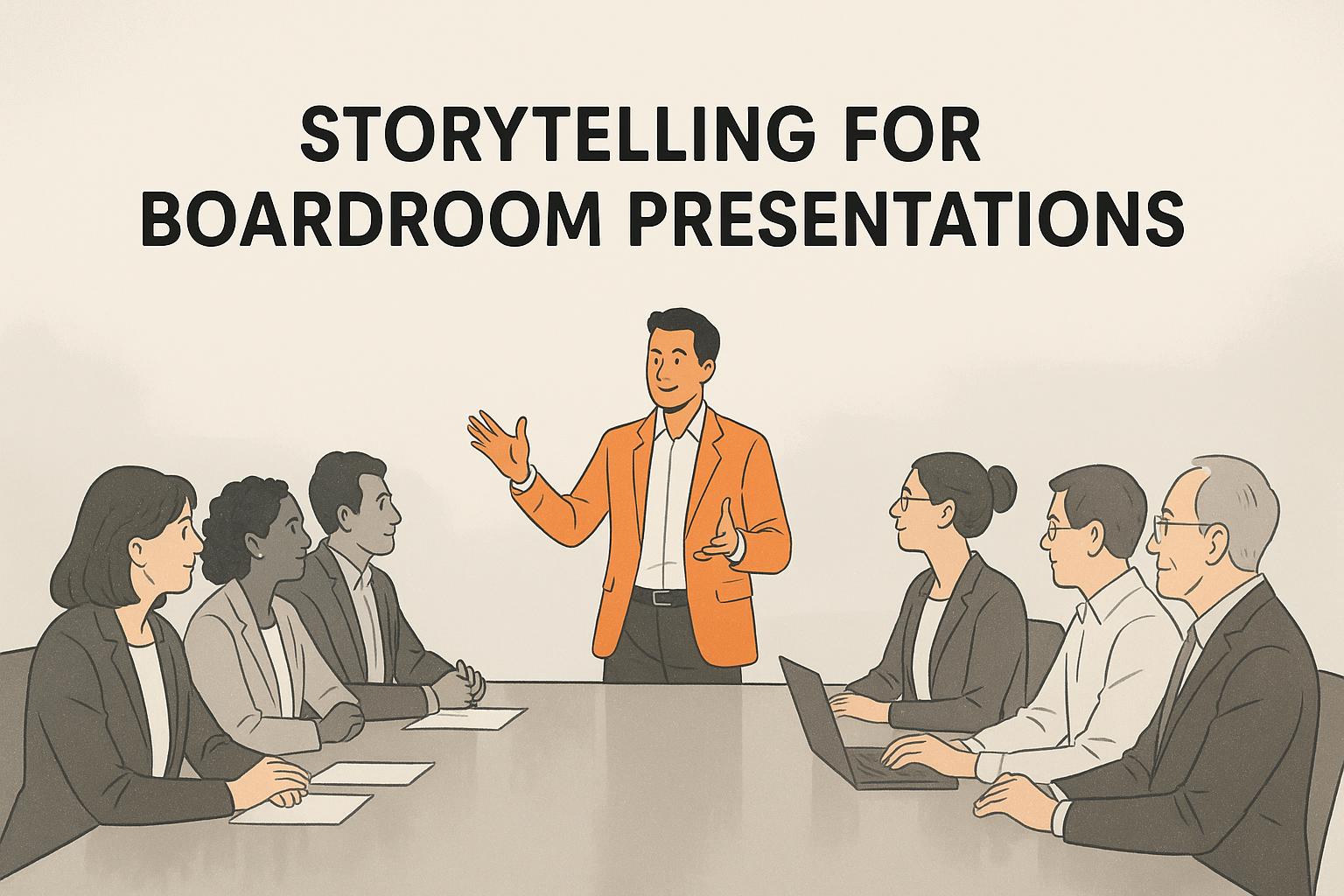
Storytelling for Boardroom Presentations
Storytelling transforms dull boardroom presentations into memorable, persuasive conversations. Why? People remember stories 22 times better than facts alone. Instead of overwhelming your audience with data, weave it into a narrative that connects emotionally and logically. Here’s how:
Stories boost retention: 65-70% of information shared through stories sticks, compared to 5-10% for stats.
Engage decision-makers: Emotional connections drive decisions, with logic justifying them.
Simplify complexity: Use stories to make data relatable and actionable.
Proven frameworks work: Apply structures like the Hero’s Journey or Situation-Complication-Resolution to guide your audience toward action.
Visuals matter: Clear, focused slides amplify your story and improve comprehension.
When done right, storytelling doesn’t just inform - it drives decisions. Whether pitching for funding or presenting strategies, a powerful narrative paired with effective visuals ensures your message resonates and leads to results.
Storytelling with Nancy Duarte: How to craft compelling presentations and tell a story that sticks
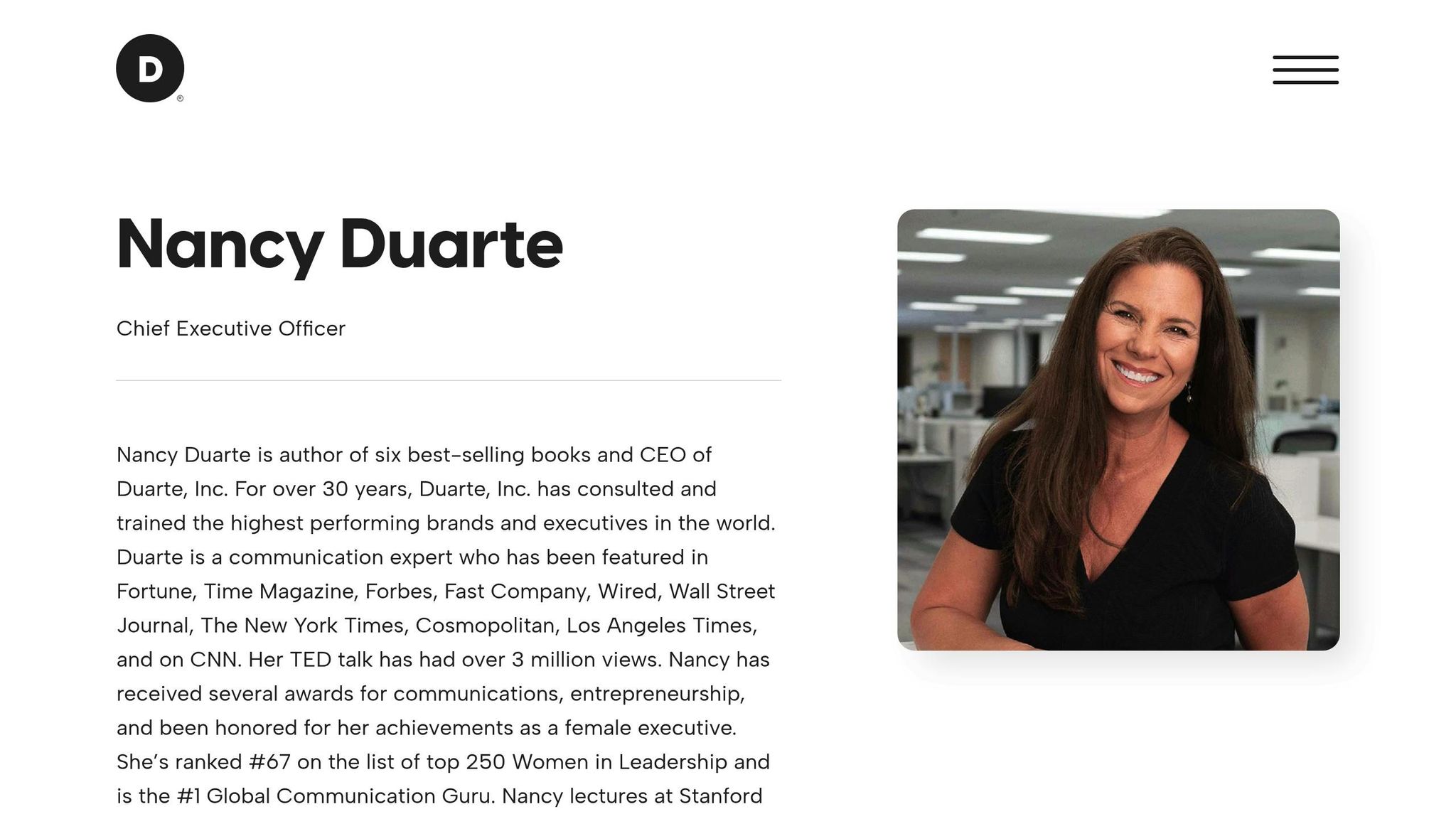
Why Stories Work with Decision-Makers
Stories have a unique way of capturing the attention of decision-makers, especially during high-stakes discussions in the boardroom. They engage both the emotional and logical parts of the brain, creating a deeper connection. Executives are naturally drawn to narratives rather than standalone data points. For instance, presenting quarterly results as a list of raw numbers might only activate their analytical thinking. But when you weave those results into a story - highlighting market challenges and the strategies that overcame them - you open up multiple ways for them to process and remember the information.
Research shows that decisions are often made emotionally first and then backed up with logic. Stories tap directly into this emotional decision-making process while also providing the logical framework executives need to justify their choices to others. This combination turns raw data into meaningful insights that can drive actions.
Turning Data into Clear Narratives
While data tells you what happened, a narrative explains why it matters. By using a structure like a problem-solution arc, storytelling transforms abstract numbers into relatable scenarios that executives can grasp and act upon.
Let’s compare two approaches: sharing a statistic about reduced customer churn versus telling the story of a specific customer who was on the brink of leaving. In the latter, you could outline the challenges your team identified, the solutions you implemented, and how those actions not only retained the customer but also improved overall satisfaction. Which one feels more impactful? The story, of course.
Incorporating real-world examples and focusing on real people makes complex concepts easier to understand and more relatable. When executives can connect the metrics to a tangible human impact, they’re better prepared to make decisions about allocating resources, setting strategies, or making operational changes.
The trick lies in crafting what experts call a business-focused narrative. This type of storytelling frames problems while directly tying data to measurable business outcomes. Instead of overwhelming your audience with every available data point, you guide them through a logical flow that emphasizes the most critical insights and their broader implications.
Creating Emotional and Logical Connections
A well-told story doesn’t just explain data - it builds a personal connection. Stories prompt decision-makers to recall their own experiences, creating a sense of familiarity and relevance. For example, if you share how your team solved an urgent customer issue, board members might relate it to similar challenges they’ve faced in their organizations. This connection makes your presentation not just informative but also memorable and impactful.
It’s important to note that the emotional element of storytelling isn’t about adding unnecessary drama. It’s about being authentic and making the data relevant. A good story brings the numbers to life. For instance, describing a client’s frustration before adopting your solution - and their relief after seeing results - helps decision-makers understand not just what happened but why it’s important for shaping future strategies. By blending emotion with logic, you turn complex data into actionable insights that resonate on a deeper level.
Building Your Presentation Story
When crafting boardroom presentations, it's essential to create a narrative that not only informs but also guides decision-makers toward action. The most impactful presentations use storytelling frameworks tailored for business settings. This approach helps structure your message in a way that keeps your audience engaged while driving your key points home.
Applying Proven Story Frameworks
Two storytelling frameworks - The Hero's Journey and Situation-Complication-Resolution - can help you shape compelling business narratives.
The Hero's Journey is particularly effective for presentations about change management or innovation. Here, you can frame your organization or the board as the hero, navigating challenges, overcoming obstacles, and ultimately achieving success through strategic decisions. On the other hand, Situation-Complication-Resolution works well for presenting the current state, introducing a challenge or opportunity, and then offering a clear solution with measurable results.
In Q1 2023, NxtGEN Executive Presence collaborated with a Fortune 500 company to revamp their boardroom pitch using the "Hero, Want, Obstacle" framework. The leadership team was portrayed as the hero, tackling market disruption. This approach led to board approval for a $120 million investment - a 30% increase over the prior year's proposal.
To make your story resonate, structure it in three parts: the beginning sets the stage and provides context, the middle introduces tension through challenges or opportunities, and the end delivers resolution with actionable recommendations. Once your story is structured, shift the focus to empowering your audience to take the lead.
Making the Audience the Hero
Instead of positioning yourself or your team as the central problem-solvers, make the board members the heroes of your story. Frame the narrative so that their decisions and actions are the driving force behind positive change.
This approach fosters a sense of ownership and engagement. When board members see themselves as key players in the story, they’re more likely to align with your recommendations. Begin by identifying their goals, the challenges they face, and the impact they aim to achieve. Build your presentation around how their involvement can lead to success. For instance, instead of saying, "Our team implemented a new customer retention strategy", reframe it as, "Your investment in customer experience initiatives helped reduce churn by 15% and increased lifetime value."
By keeping the focus on the board's goals and decision-making power, you create a narrative that drives action and aligns with their priorities.
With a strong framework and a hero-focused story, the next step is to showcase measurable outcomes.
Highlighting Change and Results
The best boardroom presentations turn challenges into measurable successes. Decision-makers want evidence that your proposals will lead to tangible results. Your narrative should emphasize this transformation and, whenever possible, quantify the benefits.
A 2024 Yale School of Management report found that presentations using storytelling techniques are 22% more likely to lead to positive decisions compared to data-only presentations.
Use before-and-after scenarios to illustrate the impact of your recommendations. For example, highlight how sales increased by 15% following the implementation of your strategy. These concrete examples make the benefits clear and relatable.
Real-world case studies can further strengthen your story. Refer to organizations that faced similar challenges and achieved success through specific actions. Be sure to acknowledge potential obstacles and outline practical strategies to address them. Decision-makers value realistic assessments that balance optimism with actionable solutions.
For high-stakes presentations, agencies like Present Partners specialize in crafting narratives and structuring content to help presenters secure funding and drive decisions through strategic storytelling.
Designing Slides That Support Your Story
Great slides can elevate your presentation, while poorly designed ones can drag it down. Even the most compelling story can lose its impact if delivered through cluttered or disorganized slides. On the other hand, well-designed slides can simplify complex ideas and turn them into actionable insights that inspire decisions.
Creating Smooth Flow Between Slides
Your slides should work hand-in-hand with your narrative, reinforcing the flow of your story. Every transition between slides should feel natural, guiding the audience seamlessly from one idea to the next. A logical progression of slides not only keeps your audience engaged but also strengthens the impact of your message. In fact, presentations that use intentional slide sequencing see a 52% higher success rate in securing funding.
Think of your slide flow as mirroring the structure of your story. Start by setting the stage with slides that outline the current situation. Then, introduce challenges or opportunities to create tension, and finally, resolve these with clear solutions and recommendations. Use section headers and recurring visual themes to signal shifts between major sections. When transitioning between topics, consider using recap slides to summarize key points before diving into new material. This approach helps your audience connect the dots and follow your reasoning.
Avoid abrupt transitions. Instead, use "bridge slides" to connect sections smoothly. For instance, after discussing a challenge, include a slide with a question like, "How can we turn this challenge into an opportunity?" before presenting your solution. This keeps the audience engaged and focused on the progression of your ideas.
Using Visuals to Strengthen Your Message
The right visuals can make your message clearer and more memorable. Every visual element should serve a purpose, enhancing your story rather than distracting from it.
A 2023 survey by Duarte revealed that 85% of executives found presentations with clear, story-driven visuals more persuasive than those overloaded with dense data.
Stick to one main idea per slide to avoid overwhelming your audience. Break complex information into smaller, digestible parts that build your argument step by step. Consistency in visual style is key - it creates a cohesive look and feel throughout your presentation. Use color strategically to highlight critical points. For example, green can signal positive outcomes, while red can draw attention to risks or areas of concern.
Charts and infographics are particularly effective when they reveal trends or comparisons, rather than just presenting raw numbers. A well-designed chart can quickly show whether performance is improving or declining. Similarly, an infographic can clarify complex processes or relationships in a way that’s easy to understand. Keep in mind that your audience may not always be fully focused, so your visuals should convey key points at a glance.
Research backs this up: a 2024 study by Yale School of Management found that presentations with a clear narrative and strong visuals were 40% more likely to lead to decisions or actions from board members.
Ultimately, your visuals should support your primary goal - delivering a clear and persuasive narrative that drives decisions.
Working with Experts for High-Stakes Presentations
Sometimes, your internal team may not have the resources or expertise to create high-impact slides. In these cases, working with professionals can make all the difference. For high-stakes presentations, expert design can significantly enhance your effectiveness.
Specialized agencies, like Present Partners, bring a wealth of experience in narrative development, visual design, and strategic communication. They excel in creating presentations that secure funding, win clients, and influence decisions. These professionals ensure your slides strike the right balance between visual appeal and strategic messaging, using proven storytelling techniques that resonate with decision-makers.
Partnering with experts also ensures brand consistency across all materials - a quality highly valued by board members when evaluating proposals. In high-stakes scenarios, investing in professional design can maximize your presentation’s impact and help you achieve your goals.
Conclusion: Creating Presentations That Drive Action
In boardroom presentations, storytelling isn't just a nice touch - it's the force that drives action. By blending engaging narratives with professional design, you can turn data and ideas into something memorable and persuasive.
Here’s why it works: People are up to 22 times more likely to remember stories than standalone facts. When you present data as part of a narrative, you create both emotional and logical connections that motivate your audience to take action.
The most effective presentations follow proven storytelling frameworks, position the audience as the hero of the story, and pair those elements with thoughtful visual design. Research backs this up - presentations that combine these strategies can increase the likelihood of action by as much as 35%.
But it’s not just about the big picture. Every slide matters. Each one should seamlessly support your story, with transitions that feel natural and visuals that reinforce your message. When you're pitching for funding, proposing a bold new strategy, or presenting to key clients, a cohesive narrative and polished design can be the difference between success and missed opportunities.
To ensure your presentation hits the mark, execution is key. For high-stakes presentations, it’s worth collaborating with experts in storytelling and design. Agencies like Present Partners, based in New York, specialize in crafting high-end PowerPoint presentations that turn your ideas into visually striking narratives, helping you secure decisions and achieve critical outcomes.
FAQs
How can I use storytelling techniques like the Hero's Journey to make my business presentations more impactful?
Storytelling frameworks, such as the Hero's Journey, can breathe life into a business presentation, turning it into something both engaging and unforgettable. Begin by pinpointing the 'hero' - this could be your audience, your company, or even a specific customer. Next, clarify their goal or the challenge they face. From there, shape your presentation as a journey: start by introducing the problem, highlight the obstacles along the way, and position your solution as the 'guide' that leads the hero to success.
This storytelling technique doesn’t just captivate; it helps decision-makers clearly see the value and impact of your ideas. For critical presentations, you might want to collaborate with professionals like Present Partners, who can help fine-tune your story and craft visuals that strengthen your message.
How can I ensure that the visuals in my presentation support the story without becoming a distraction?
To make your visuals truly elevate your storytelling, aim for clarity and purpose. Keep designs clean and straightforward, ensuring they emphasize your main points without distracting or confusing your audience. Whether it's a chart, image, or graphic, every element should serve to strengthen the story you're telling.
Stick with a cohesive color palette and consistent typography to maintain a polished appearance. Avoid cramming slides with excessive text or using flashy animations that might pull focus away from your message. Well-crafted visuals not only grab attention but also make your key points more memorable.
Why should your audience be the hero of your boardroom presentation, and how does this impact decision-making?
When you position your audience as the hero in a boardroom presentation, the spotlight naturally shifts to their goals, challenges, and achievements. This makes your message not only more engaging but also deeply relatable. It allows decision-makers to see how your ideas or solutions align with their specific needs, creating a sense of connection and shared purpose.
By building your narrative around what matters most to them, you craft a story that strikes both emotional and logical chords. This approach doesn’t just capture attention - it increases the chances of gaining their support and driving meaningful results.